


Olive cultivation in the era of globalization
- Departamento de Antropología, Geografía e Historia, Universidad de Jaén, Spain
- Departamento de Ingenería Cartográfica, Universidad de Jaén, Spain
Abstract
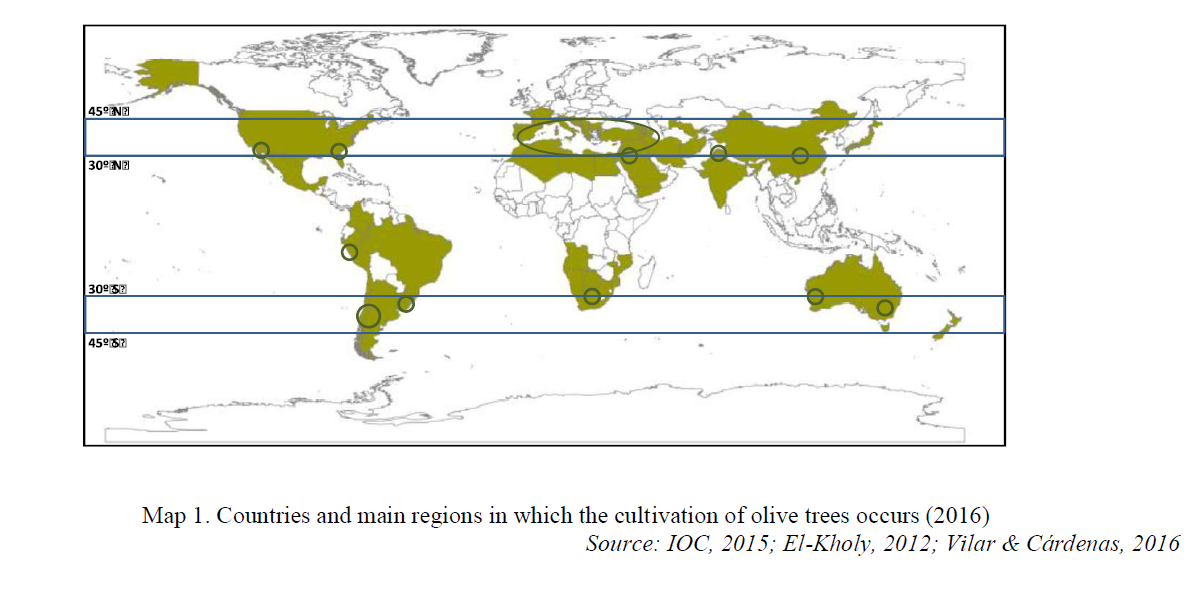
The consumption of olives and olive oil is very established in the Mediterranean. Also, the great gastronomic and health consideration of these products, as well as their relative scarcity and specificity makes them well considered and paid in the globalised markets, which have absorbed without difficulty the increase in production experienced in the last decades. In this context we witnessed the expansion and intensification of its production in its region of origin, but it is also being planted in areas which do not necessarily share the ideal thermopluviometric conditions for this crop. The purpose of this paper is to show, in a spatiotemporal point of view, the expansive dynamic of the olive tree. The main conclusion is this cycle has a very important potential growth ahead, but is not exempt of limitations and doubts, both for the new productive regions and the Mediterranean regions that are specialised in this millennial crop.